You won’t find Consumer Reports’ hot tub reviews based on hands-on testing because the market’s diversity and high costs make it tough to evaluate fairly.
Instead, they rely on customer feedback, warranty data, repair frequency, and long-term reliability.
They analyze owner surveys to focus on durability, performance, and maintenance issues.
Since direct testing isn’t feasible, their insights come from aggregated user experiences.
Keep exploring to understand their unique approach and what factors they prioritize when appraising hot tubs.
This way, you get a clear picture of what to expect before making a purchase.
Key Takeaways
- Consumer Reports does not conduct hands-on testing of hot tubs due to market diversity and high costs. Instead, they focus on gathering insights primarily from owner feedback, surveys, and aggregated consumer reviews.
- Their evaluation centers on durability, performance, customer satisfaction, and how often repairs are reported. They also consider warranty coverage, availability of replacement parts, and long-term ownership costs as key factors for reliability.
- Ratings rely heavily on data reported by users and the overall industry reputation. This approach offers helpful insights into long-term upkeep and how reliable the hot tubs are over time.
Why You Won’t Find Hot Tub Reviews From Consumer Reports

Although Consumer Reports is known for thorough product testing, you won’t find hot tub reviews from them because the market’s diversity makes all-encompassing evaluation impractical and costly.
Consumer Reports avoids hot tub reviews due to the market’s vast diversity and high evaluation costs.
The wide range of hot tubs—acrylic, rotomolded, inflatable, and various international brands—creates significant challenges for impartial evaluation and fair brand comparison.
Many manufacturers hesitate to provide objective data, which makes independent assessment efforts even more complicated. Without official awards or recognized ratings, Consumer Reports faces industry challenges in delivering reliable consumer guidance.
Their commitment to unbiased, comprehensive reviews means they avoid hot tub reviews where extensive product testing is unfeasible.
How Consumer Reports Tests Hot Tubs for Quality and Reliability
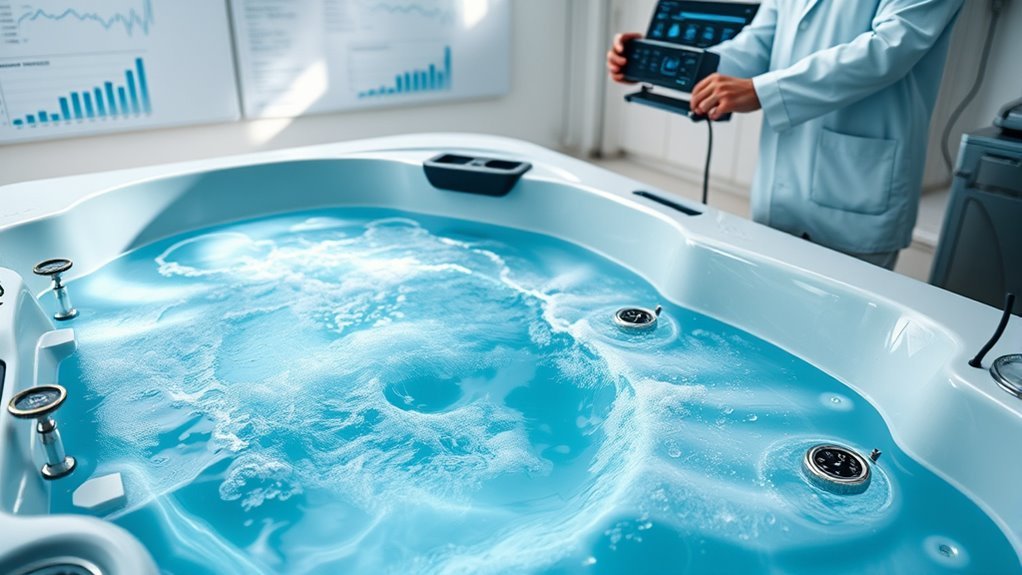
While Consumer Reports doesn’t perform hands-on testing of hot tubs, they gather valuable insights by analyzing owner feedback, industry data, and surveys to evaluate quality and dependability. You’ll find their assessments focus on durability, performance, and customer satisfaction, drawn from aggregated consumer reviews and reported issues.
They carefully examine warranty coverage, repair frequency, and the availability of replacement parts to gauge reliability. Consumer Reports also considers long-term ownership costs, energy efficiency, and ease of maintenance to give you a complete picture.
Since they don’t conduct direct testing, their ratings rely heavily on user-reported data and industry reputation. This method helps you understand how hot tubs hold up over time and what to expect in terms of upkeep and repair.
Frequently Asked Questions
What Hot Tub Is Best According to Consumer Reports?
Consumer Reports doesn’t name a best hot tub because they don’t review them. You’ll need to rely on user reviews and personal preferences to find the right one that fits your needs and budget.
Which Brand of Hot Tub Is Considered the Most Reliable?
Think of a Bullfrog hot tub like a trusty old pickup truck—it keeps running with minimal fuss. You’ll find Bullfrog’s durable design and long-lasting parts make it the most reliable brand you can count on for years.
What Are Some Bad Hot Tub Brands to Avoid?
You should avoid low-cost, inflatable hot tubs and generic Chinese brands. They often have poor durability, unreliable warranties, and bad customer service, leading to frequent repairs and frustration. Stick with reputable brands for better reliability.
What Is the Number One Rated Hot Tub?
You won’t find a single “number one” hot tub crowned by experts. Instead, picture yourself soaking in a reliable, well-loved brand, chosen for quality and comfort rather than a perfect score or official rating.
Conclusion
When it comes to hot tubs, Consumer Reports doesn’t offer direct reviews, so you’ll need to look elsewhere for detailed evaluations. However, they do focus on quality and reliability testing, giving you a solid idea of what to expect.
Remember, “you get what you pay for”—investing in a well-tested hot tub can save you headaches later. So, do your homework, and choose wisely to enjoy a relaxing soak without surprises.
Taking the time to research hot tubs through quality and reliability insights can make a big difference. By understanding what Consumer Reports highlights, you can better navigate your options and find a durable, enjoyable hot tub. That way, you’ll get the best value and a long-lasting, comfortable experience every time you step in.