To buy a hearing aid confidently, start by getting a professional hearing test to identify your exact needs. This step is crucial because it helps you understand the degree of your hearing loss and what type of device will work best for you.
Knowing your specific hearing profile makes the whole process smoother and more effective.
Next, compare prescription and OTC options. Prescription aids offer better sound quality and personalized support, while OTC devices tend to be more affordable and work well for mild to moderate hearing loss.
It’s all about finding the right balance between cost and functionality.
When choosing your hearing aid, consider features like rechargeable batteries, noise reduction, and smartphone compatibility.
Also, make sure you pick a provider who offers reliable follow-up care.
Keep exploring and asking questions until you find a device that fits your lifestyle and hearing health perfectly.
Key Takeaways
– Get a professional hearing test to identify your specific hearing loss before choosing a hearing aid.
This step is crucial because it helps you understand exactly what you need.
– Compare prescription and OTC hearing aids based on sound quality, features, and price for your needs.
Take your time here—you want to find the best fit without overspending.
– Prioritize devices with smartphone compatibility, rechargeable batteries, and noise reduction for better usability.
These features can really make a difference in your daily experience.
– Choose a provider offering reliable fitting, troubleshooting, and ongoing support for optimal hearing aid performance.
Good support means fewer headaches down the line.
– Read consumer ratings to select hearing aids with long-term satisfaction and proven reliability.
Hearing from others can give you a clearer picture of what to expect.
Assess Your Hearing Needs and Get Tested

Before choosing a hearing aid, you need to get a professional hearing test to understand your specific hearing loss. This hearing evaluation, conducted by a hearing care provider, measures your hearing thresholds across frequencies, helping identify how background noise affects you.
A professional hearing test reveals your specific hearing loss and how background noise impacts your hearing.
The assessment is essential because knowing your hearing needs guides your hearing aids selection. Whether you later consider prescription hearing aids or OTC hearing aids, this initial step guarantees the device suits your condition.
Many adults, especially over 70, skip this step, missing out on better communication and quality of life. Don’t wait—early testing helps prevent complications linked to untreated hearing loss, like memory issues or depression.
Your hearing care provider will tailor recommendations based on your detailed hearing test results. So, getting tested early really makes a difference!
Compare Prescription and OTC Hearing Aids: Pros and Cons
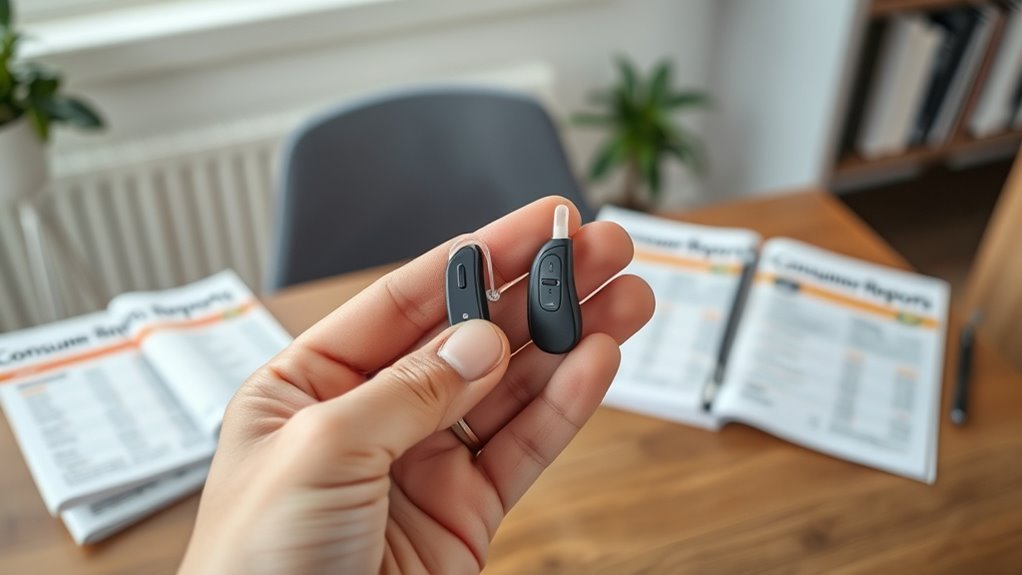
How do you decide between prescription and over-the-counter (OTC) hearing aids? Prescription hearing aids offer advanced features to help with complex hearing needs, personalized customization, and professional support after fitting.
They tend to score higher in consumer ratings for sound quality and reliability but come with a higher price tag. OTC hearing aids provide affordability and accessibility, suitable for mild to moderate loss, with some customization via apps.
Here’s a quick price comparison and feature overview:
- Prescription hearing aids: tailored fit, professional support, higher cost, better sound quality
- OTC hearing aids: lower price, limited customization, app adjustments, good for mild loss
- Leading hearing aid brands dominate prescription options
- Consumer ratings favor prescription devices for long-term satisfaction
Weigh these pros and cons to choose what fits your needs.
Choose Hearing Aid Features and Support for Best Results

Once you’ve decided between prescription and OTC hearing aids, focus on the features and support that will deliver the best experience. Look for smartphone compatibility and app-controlled adjustments, so you can easily tweak settings on the go.
Prioritize rechargeable batteries to save money and avoid constant replacements. Advanced features like digital noise reduction, directional microphones, and feedback suppression enhance sound clarity in various environments.
Rechargeable batteries and advanced features improve sound clarity while reducing costs and maintenance.
Telecoil technology or Auracast Bluetooth streaming boosts listening in public spaces and connects wirelessly to devices. Equally important is extensive support—choose providers offering fitting and troubleshooting assistance plus reliable follow-up care.
This ongoing support ensures your hearing aids perform at their best and adapt as your needs change, delivering the best long-term results.
Frequently Asked Questions
What Is the Best Hearing Aid According to Consumer Reports?
The best hearing aids according to Consumer Reports are Oticon, Signia, and Phonak. You’ll find they excel in sound quality, comfort, and reliability, helping you hear clearly in various environments with dependable support.
What Hearing Aid Do Most Audiologists Recommend?
If you’re seeking the best hearing aid, most audiologists recommend digital, behind-the-ear or receiver-in-the-canal models from trusted brands like Oticon or Phonak. They guarantee personalized fitting and advanced features for your hearing needs.
How Much Should You Pay for a Good Hearing Aid?
You should expect to pay between $1,500 and $3,500 for a good hearing aid. Don’t forget to budget for professional fitting, programming, and follow-up care to get the best performance and comfort.
What Is the Number One Rated Hearing Aid?
You might not expect it, but Oticon is the number one rated hearing aid. You’ll love its advanced sound processing and comfort, making noisy environments easier to handle. It’s no surprise users rave about its reliability.
Conclusion
So, you want to buy a hearing aid? Just wing it, right? Forget tests or comparing options—who needs those pesky details when you can pick the flashiest gadget off the shelf?
But if you’d rather actually hear your favorite tunes and conversations, follow the tips: get tested, weigh your choices, and pick features that fit your life.
Getting a hearing test is the first step. It helps you understand what kind of hearing aid will work best for your specific needs. Then, compare different models and brands to find one that suits your lifestyle and budget.
Choosing the right features, like Bluetooth connectivity or rechargeable batteries, can make a huge difference. Your ears—and your social life—will thank you for not going rogue!
When buying a hearing aid, remember that careful testing, thoughtful comparison, and selecting the right features are key. This approach ensures you get a device that truly improves your hearing experience, helping you stay connected and enjoy life to the fullest.