Checking your consumer credit report doesn’t affect your credit score because it triggers a soft inquiry, which is score-neutral. This means you can review your report as often as you want without lowering your creditworthiness. It’s a great way to keep an eye on your financial health without any risk.
Regularly checking your report helps you spot errors like incorrect balances or outdated info that could hurt your score. If you find mistakes, disputing them promptly guarantees your report stays accurate.
This can actually improve your credit health over time. So, keep exploring to see how fixing errors can boost your financial standing.
Key Takeaways
- Checking your own credit report causes a soft inquiry. This does not affect your credit score.
- Accurate credit reports help maintain or improve your credit score by reflecting your true financial behavior.
- Errors on credit reports, like incorrect balances, can lower your credit score if they’re not fixed.
- Disputing and correcting these inaccuracies usually improves your score within about 30 days.
- Regularly reviewing your credit reports helps protect against identity theft. It also supports your long-term credit health.
Does Checking Your Credit Report Affect Your Credit Score?

Although many people worry that checking their credit report might lower their credit score, it actually doesn’t. When you’re checking your credit report, it counts as a soft inquiry, which means it won’t impact your credit score.
The Consumer Financial Protection Bureau confirms that reviewing your credit history regularly is a safe, score-neutral activity. By conducting a credit report review, you *guarantee* the accuracy of your personal and account information, helping you catch any mistakes early.
Monitoring your credit report can also alert you to identity theft, which could otherwise harm your credit score if left unnoticed. Unlike applying for new credit, which triggers a hard inquiry and may lower your credit score temporarily, checking your own credit report keeps your credit healthy and under your control.
How to Spot and Fix Errors to Improve Your Credit Score
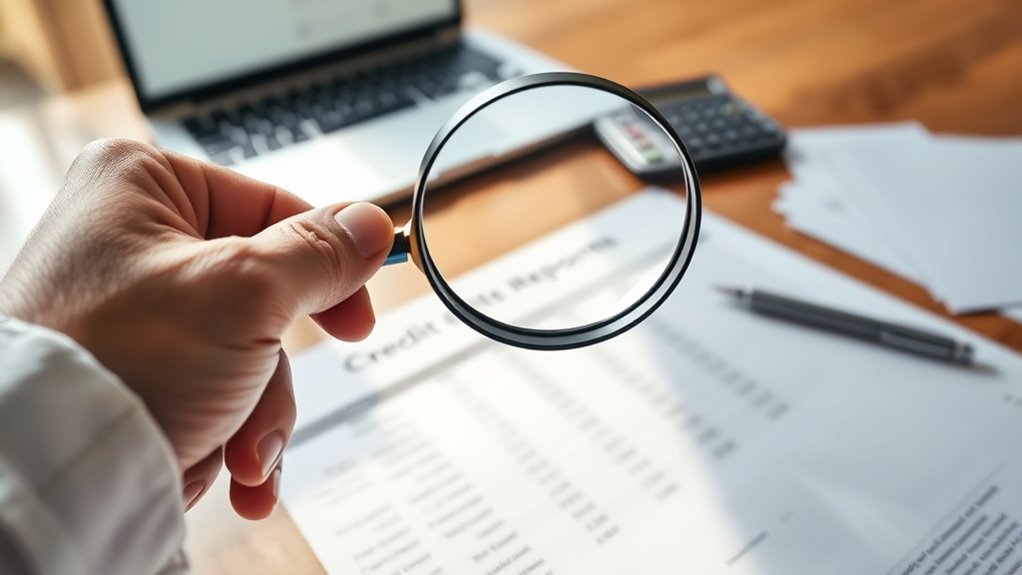
If you regularly review your credit report, you can quickly spot errors that drag down your credit score. Common errors include incorrect account balances, closed accounts listed as open, or wrong personal information.
Regularly reviewing your credit report helps identify errors like wrong balances or outdated account statuses quickly.
When you find such inaccuracies, it’s important to dispute them with the credit bureaus promptly. Filing a dispute through official channels ensures the errors are investigated and usually fixed within 30 days.
By addressing incorrect information, you help maintain your credit report’s accuracy. Keeping your credit report accurate and up-to-date can considerably improve your credit score over time.
Make reviewing your credit report a habit to catch and fix errors early. This protects your creditworthiness and helps you achieve better financial opportunities.
Frequently Asked Questions
Does Pulling a Consumer Report Hurt Your Credit?
No, pulling your own consumer report doesn’t hurt your credit. It’s considered a soft inquiry, so you can check your credit health anytime without worrying about lowering your score or impacting your credit standing.
What Is the Biggest Killer of Credit Scores?
The biggest killer of your credit score is late or missed payments. When you don’t pay on time, your score drops markedly and the negative mark can stay on your report for up to seven years.
Is a 500 FICO Score Bad?
Yes, a 500 FICO score is bad because it signals high credit risk. You’ll likely face higher interest rates and struggle to get loans. To improve, you should pay bills on time and reduce your debt.
What Are the Top 3 Things That Affect Your Credit Score?
The top three things that affect your credit score are your payment history, credit utilization, and length of credit history. You’ll want to pay bills on time, keep balances low, and maintain accounts long-term for the best score.
Conclusion
Checking your credit report won’t hurt your credit score, but ignoring it can. By regularly reviewing your report, you catch errors that might be dragging your score down.
Fixing these mistakes can boost your credit, while leaving them unchecked keeps you stuck with a lower score. So, don’t avoid your credit report—embrace it.
Staying informed about your consumer credit report is key. It helps you understand your credit standing and take control of your financial future. The simple act of monitoring your credit report could be the difference between financial struggle and opportunity, making it an essential part of managing your credit score.