You can trust Consumer Reports because they use anonymous purchases and nearly 600 experts to conduct unbiased, rigorous product testing.
Their evaluations combine real-world lab results with user feedback, giving you clear, transparent ratings.
They never accept advertising or freebies, ensuring their safety assessments stay objective.
Their detailed approach helps you make smarter, safer choices.
Keep exploring to understand how their testing and ratings can guide your next purchase confidently.
Key Takeaways
– Consumer Reports uses independent, anonymous product testing by nearly 600 experts to ensure unbiased evaluations. It rejects advertising and freebies from manufacturers to maintain objective and trustworthy reviews.
This way, you know the reviews aren’t influenced by outside pressure or marketing tricks.
– Standardized testing methods and real-world assessments guarantee consistent and accurate product information. Ratings combine lab results and user feedback, presented with transparent, easy-to-understand scoring systems.
So, you get a full picture of how products perform both in the lab and in everyday use.
– Consumer Reports closely monitors product recalls to provide reliable and safety-focused insights.
That means you can trust their info to help keep you safe and informed.
Why You Can Trust Consumer Reports’ Testing

How does Consumer Reports guarantee you get trustworthy product evaluations? They rely on independent testing, using rigorous methods and standardized procedures to deliver unbiased evaluations.
Consumer Reports ensures trustworthy evaluations through independent testing and standardized, rigorous methods.
You’ll appreciate that all products are bought anonymously, preventing any influence from manufacturers. Nearly 600 expert testers, including scientists and engineers, conduct real-world testing and detailed safety assessments to ensure accuracy.
Their objective reviews don’t accept advertising or freebies, keeping their results free from bias. Plus, they develop specialized equipment to measure performance precisely.
Consumer Reports even performs unique impact tests, like dropping bike helmets, to assess safety thoroughly. They also track product recalls closely, providing you with reliable information that helps you make safer, smarter choices every time.
How to Make Sense of Consumer Reports Ratings
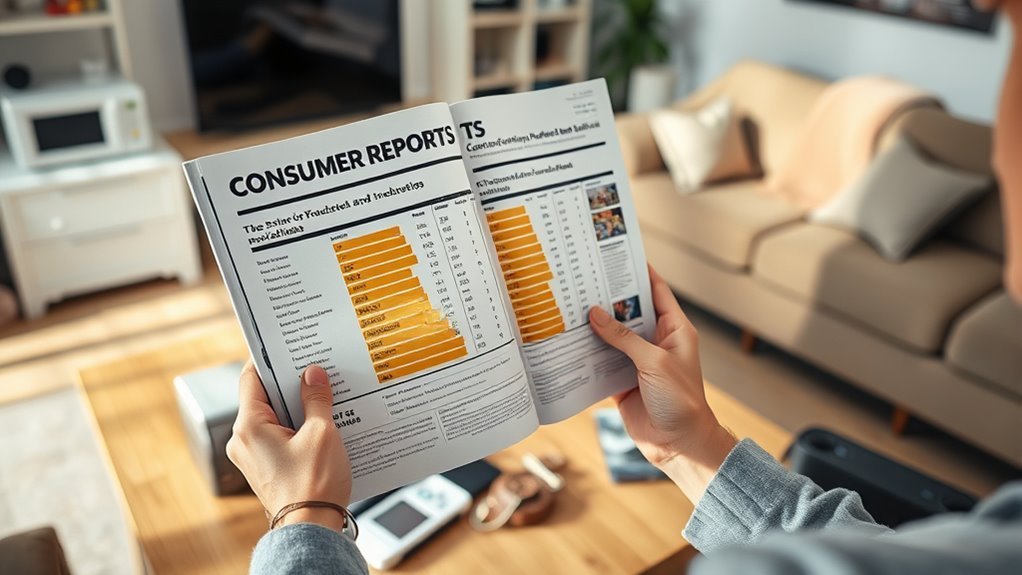
Consumer Reports puts a lot of effort into testing products thoroughly, but understanding their ratings can help you make the most of that information. Their ratings combine independent testing results from over 60 labs with user feedback, offering a clear picture of product performance and safety.
Thanks to a transparent scoring system, including color-coded circles, you can quickly gauge how products stack up.
Here’s how to make sense of Consumer Reports ratings:
- Know that unbiased reviews come from anonymous purchases and rigorous lab testing.
- Use the transparent scoring system to compare product performance easily.
- Consider your personal needs since ratings reflect both lab results and user feedback.
This approach builds strong consumer trust in their reliable, all-encompassing ratings.
Frequently Asked Questions
Are Consumer Reports Still Trustworthy?
Yes, you can trust Consumer Reports because they maintain independence, test products anonymously, and use rigorous methods. Their transparent ratings and focus on safety guarantee you get unbiased, reliable information to make smart buying decisions.
Is It Worth It to Pay for Consumer Reports?
Paying for Consumer Reports is like planting a seed that grows trust—you’ll get reliable, unbiased reviews backed by rigorous testing. With their expert insights, you’ll shop smarter and avoid costly mistakes, making your investment truly worth it.
Who Is Behind Consumer Reports?
You’ll find Consumer Reports is run by a nonprofit team of nearly 600 testers, scientists, and engineers who buy products themselves, ensuring unbiased reviews. They don’t accept ads, so you get honest, independent information every time.
How Biased Are Consumer Reports?
You won’t find Consumer Reports bending the truth—they keep things above board with independent, lab-based tests. While no system’s perfect, their strict policies help you dodge most bias in their ratings.
Conclusion
You might wonder if Consumer Reports truly has your best interests at heart. Imagine holding a product in your hands, unsure if it’s worth your hard-earned money. That’s where their rigorous testing comes in—cutting through marketing noise to reveal the truth.
But don’t just take their word for it; explore their ratings and see how their unbiased results can guide you to smarter choices. The real question is: will you trust what you discover?
When it comes to making informed decisions, Consumer Reports can be a valuable resource. Their thorough reviews and honest assessments help you avoid costly mistakes. So, if you want reliable guidance and trustworthy product insights, Consumer Reports might just be the partner you need in your buying journey. Trust their expertise to help you shop smarter and protect your investment.