If you’re looking for a mattress that adapts precisely to your comfort needs, Sleep Number beds are definitely worth considering. These mattresses let you adjust firmness with 20 different settings, so you can find just the right feel.
Plus, each side can be controlled independently, which is perfect if you share your bed.
Higher-end Sleep Number models offer even more benefits like better support, improved motion isolation, and smart features such as sleep tracking and temperature control. These extras can really enhance your sleep experience.
That said, budget models might not be as durable, especially if you’re a heavier sleeper. So, it’s important to weigh your options.
If you want a clear idea about support, comfort, and the various buying choices, diving into the details can help you make the best decision.
Key Takeaways
- Sleep Number beds offer customizable firmness with dual chambers, enhancing personalized comfort and support for shared sleepers. This means both people can set their side just right.
- Higher-end models provide superior support, motion isolation, and pressure point relief compared to budget options like It Bed. So, if you want the best sleep experience, going premium might be worth it.
- Advanced features include sleep tracking, temperature regulation, and app integration, improving overall sleep quality and convenience. These tech perks make it easier to understand and improve your sleep habits.
- Durability concerns arise from unclear foam density, risking faster wear, especially for heavier sleepers. That’s something to keep in mind if you want your bed to last a long time.
- Future models promise automatic firmness adjustments and voice control, aiming for smarter, more adaptive sleep experiences. It sounds like Sleep Number is really pushing to make beds that adjust to you without any hassle.
Is a Sleep Number Bed Right for You?
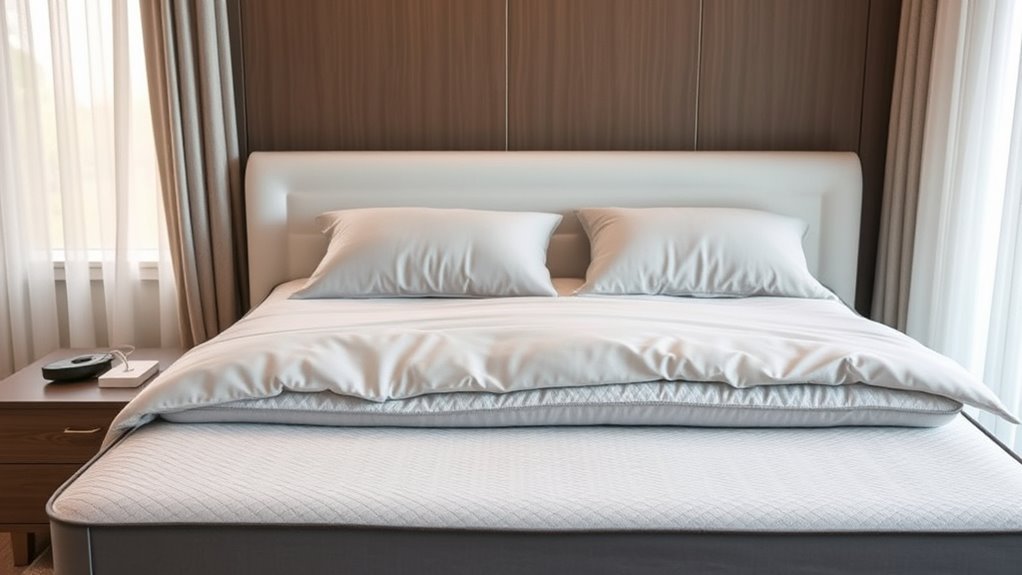
If you want a mattress that adapts precisely to your comfort needs, a Sleep Number bed could be a great fit. These adjustable air beds let you customize firmness levels on each side, making them perfect if you share a bed but prefer different support.
While Sleep Number beds often combine air chambers with memory foam for added comfort, they really shine if you’re someone who embraces technology. Many models include advanced sleep tracking features to monitor your rest, plus extras like temperature regulation and snore detection.
However, if you’re not comfortable with tech or have a tight budget, these high-end beds might not be the best choice. Overall, they suit those who want a personalized, tech-driven sleep solution rather than a simple, traditional mattress.
How Sleep Number Beds Customize Your Sleep Experience
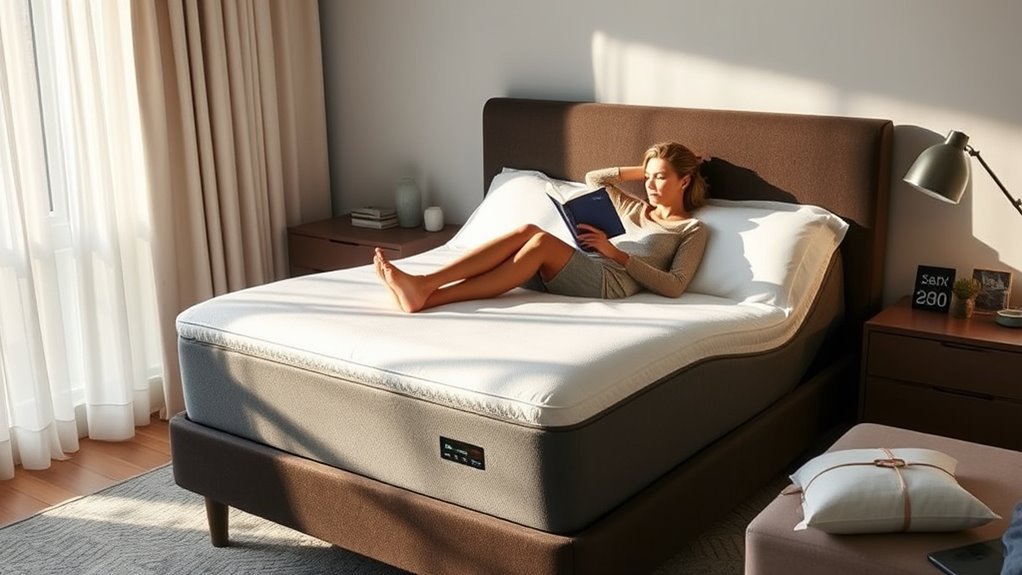
When you choose a Sleep Number bed, you gain precise control over your sleep environment. The mattress features adjustable firmness through air chambers that you can inflate or deflate using a remote or smartphone app.
This lets you tailor the firmness level on each side individually, providing personalized support that suits your unique preferences. Advanced models use smart technology with built-in sensors to monitor your sleep patterns and make automatic adjustments throughout the night.
This guarantees your comfort stays perfect, adapting to your movements and sleeping positions. Whether you prefer a firm or soft feel, the real-time customization of these air chambers lets you create the ideal sleep surface, enhancing your overall rest experience.
What Consumer Reports Says About Sleep Number Support and Comfort
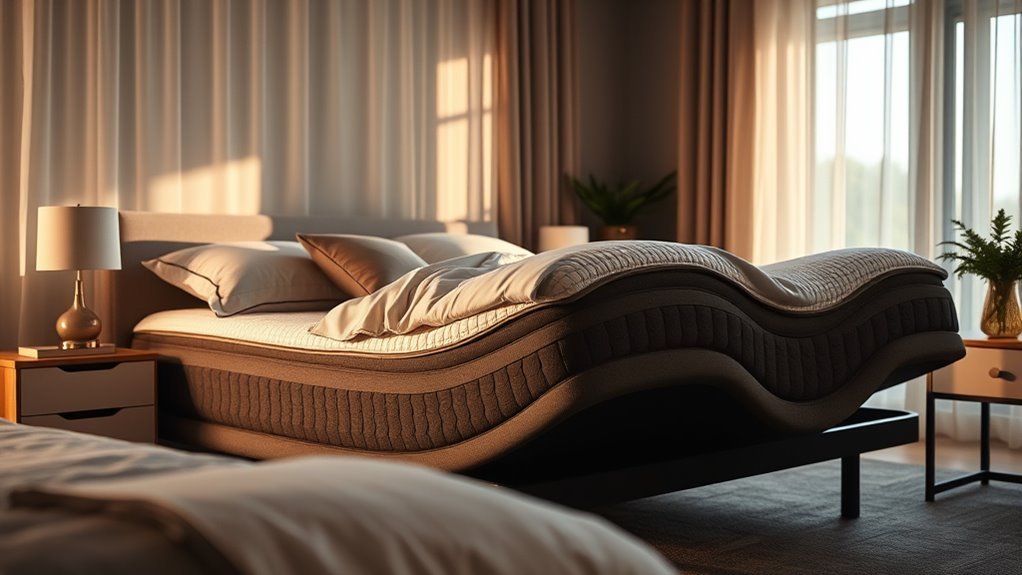
Although Sleep Number beds generally deliver good support, Consumer Reports highlights that the quality varies considerably depending on the model you choose. Higher-end Sleep Number beds like the i8 and c2 provide especially better support and comfort, making them a strong option if firmness and support quality are your priorities.
However, budget models such as the It Bed received mediocre support scores, which can be especially disappointing for larger or taller back sleepers. Support also tends to fluctuate if your partner changes positions, and that may affect your comfort during the night.
Interestingly, support quality remains similar across lower and higher firmness settings, with the It Bed rated a firmness level of only 3 out of 10. So, your overall comfort and support really depend on picking the right Sleep Number bed model and firmness.
How to Find Your Ideal Sleep Number Setting at Home
To find your ideal Sleep Number setting at home, start by inflating the mattress to 100 and slowly lower the number until the firmness feels just right.
Most people find comfort between 35 and 50, while It Bed users prefer settings closer to 80. Focus on adjusting until your body feels supported without sinking too much into the mattress.
Inflation Adjustment Process
Because comfort varies widely, you’ll want to start by inflating your Sleep Number bed to 100 and then gradually reduce the air until you find a firmness level that supports your body without causing pressure points or sinking.
This inflation adjustment process relies heavily on trial and error since perfect comfort depends on your unique body type and preferences. Focus on firmness levels that provide stable support without excessive compression.
Most users settle between 35 and 50, while some prefer firmer settings. Here’s a quick guide to help you track your adjustments:
| Step | Firmness Level Setting | Comfort Feedback |
|---|---|---|
| 1 | 100 | Too firm, no sinking |
| 2 | 70 | Slightly firm, some support |
| 3 | 50 | Balanced support, comfortable |
| 4 | 35 | Softer, may cause sinking |
Keep adjusting until you hit your ideal firmness level. It might take a few tries, but you’ll find the sweet spot that feels just right for you.
Preferred Firmness Ranges
When you’re adjusting your Sleep Number bed at home, most people find their preferred firmness falls between 35 and 50. This range strikes a good balance between support and comfort.
To find your ideal firmness settings, start at 100 and gradually lower the inflation levels until the bed feels just right for you. Keep in mind, it’s all about personal preference—what feels supportive to one person might feel too firm or too soft to another.
For It Bed owners, firmness tends to be higher, around 80, reflecting a preference for more support. Since your ideal setting depends on how your body responds, expect some trial and error.
Focus on how the bed supports your body and how comfortable you feel to dial in the perfect firmness. It might take a little time, but you’ll find the right setting for you.
Comparing the It Bed With Other Sleep Number Models
Although the It Bed offers a softer feel with a firmness score of 3, it doesn’t provide the same level of support and motion isolation as other Sleep Number models like the i8 and c2. In lab tests, the It Bed showed mediocre support, especially for larger or taller back sleepers and during position changes.
You’ll notice more motion transfer on the It Bed, meaning your partner’s movements could disturb your sleep more than on the i8 or c2. These higher-end Sleep Number models consistently deliver better support and reduce motion transfer effectively.
If you prioritize firm support and minimal disturbance, the It Bed might fall short compared to other models. Ultimately, your choice depends on whether you value softer firmness or superior support and motion control.
How Sleep Number’s Smart Technology Helps You Sleep Better
Sleep Number’s smart technology transforms how you manage your sleep by letting you adjust firmness and monitor your rest through the SleepIQ app. Thanks to embedded sensors inside the mattress, the bed tracks your heart rate, breathing, and movements, providing a detailed picture of your sleep patterns.
The SleepIQ app then uses this data to offer personalized insights and recommendations, helping you optimize comfort and support. With customization at its core, the technology guarantees your sleep environment suits your unique needs.
Plus, upcoming models will feature automatic adjustments that use smart sensors to tweak firmness and temperature throughout the night, further enhancing your comfort. This precise, data-driven approach makes it easier for you to get better, more restful sleep every night.
What to Expect From Sleep Number’s Adjustable Air Chambers
You can customize your Sleep Number bed’s firmness with 20 different settings, from super soft to very firm.
If you share the bed, the dual-chamber design lets each side adjust independently for personalized comfort.
These adjustable air chambers respond quickly, so you’ll find your perfect sleep feel in no time.
Air Chamber Customization
When you want precise control over your bed’s firmness, Sleep Number’s adjustable air chambers deliver with 20 customizable settings ranging from soft to firm. These air chambers inflate or deflate through tubes connected to an external pump, letting you tailor your sleep surface exactly how you like it.
You can easily handle firmness adjustment using a remote control or the smartphone app, guaranteeing personalized firmness every night. It’s super convenient and puts you in the driver’s seat of your comfort.
Key features include:
- Flexible rubber air chambers that adjust smoothly
- Fine-tuning options from 5 (soft) to 100 (firm)
- Dual-chamber design for independent side adjustments
- Most users prefer settings between 35 and 50 for best support
This customization guarantees you enjoy a sleep experience tailored exactly to your comfort needs. It’s all about making sure you get the rest you deserve.
Dual-Sided Firmness Options
How do you and your partner get personalized comfort without compromising on shared space? Sleep Number beds use dual air chambers that let each of you adjust firmness independently.
This dual-chamber design, standard in Queen and larger sizes, provides adjustable firmness levels from 5 to 100. That means you get personalized support tailored to your unique preferences.
Thanks to Sleep Number’s responsive air technology, the air chambers quickly respond to changes. So, you can fine-tune firmness for different sleeping positions throughout the night.
Models like the Climate360 even add temperature control, enhancing comfort further. With these dual-sided firmness options, you won’t have to settle for one-size-fits-all comfort.
Each side can feel just right, making your shared bed a truly personalized haven.
Pros and Cons of Buying a Sleep Number Bed Online vs. In-Store
Although buying a Sleep Number bed online offers convenience and often lower prices, shopping in-store lets you test different firmness levels firsthand and get expert advice tailored to your needs.
When you buy in-store, you get personalized support and hands-on experience with adjustable firmness, helping you find the perfect match without guesswork. Online, you might save money but face trial-and-error adjusting the bed’s firmness on your own, which can be tricky if you’re new to air beds.
Here’s what to contemplate:
- In-store: expert consultations and immediate firmness adjustments
- Online: easier setup and potential cost savings
- Personalized support available only in-store
- Trial-and-error firmness tuning mostly online
Weigh these pros and cons to decide what suits you best.
Sleep Number Mattress Construction and Durability Explained
When you look at a Sleep Number mattress, the core is an adjustable air chamber that lets you control firmness. The foam layers on top vary in thickness and density, but exact details aren’t always clear.
These materials play a big role in how long your mattress will last and how comfortable it feels over time. So, understanding what’s inside can really help you decide if it’s the right fit for you.
Mattress Core Materials
Because Sleep Number mattresses rely on an adjustable rubber air chamber as their core support, you can customize firmness levels to suit your comfort. This air chamber inflates or deflates to offer 20 firmness options, controlled by smart technology.
Above the air chamber, you’ll find foam layers that add extra cushioning and comfort. These layers often include foam-infused materials like gel-infused foam to enhance cooling and softness. The foam support complements the air chamber, but the foam density varies by model and isn’t usually disclosed.
Key mattress core materials include:
- Adjustable rubber air chamber for personalized firmness
- Polyfoam and gel-infused foam layers for comfort
- Foam support that works with the air chamber
- Variable foam density affecting durability and feel
Foam Density Concerns
While Sleep Number mattresses offer customizable firmness through their adjustable air chambers and comfort from foam layers, the lack of transparency about foam density raises valid concerns. You won’t find specific foam density details from Sleep Number, making it hard to judge foam durability and mattress longevity.
Since the foam layers—like polyfoam and gel-infused foam—vary in thickness but lack density info, you risk faster compression and reduced support over time, especially if you’re a heavier sleeper. Lower density foam tends to break down quicker, which can compromise the mattress’s overall performance.
Without clear foam density ratings, it’s difficult to predict how well the mattress will hold up, leaving you uncertain about long-term comfort and support. So, it’s a bit of a gamble when it comes to knowing what you’re really getting under the covers.
What Future Sleep Number Models Will Offer
As Sleep Number continues to innovate, you can expect future models to deliver smarter, more personalized sleep experiences. The upcoming Sleep Number 360 Smart Bed will impress with automatic adjustments, temperature regulation, and integrated sensors that track your sleep patterns.
Future releases aim to enhance comfort and health monitoring, using AI-driven adjustments to optimize support throughout the night. You can also look forward to:
- Advanced health monitoring with more precise sensors
- Enhanced comfort through new foam layers and temperature control
- Voice control for hands-free bed adjustments
- Seamless app integration for real-time sleep insights
These features will help you customize your sleep environment like never before. Honestly, it’s making Sleep Number beds increasingly worth the investment.
Frequently Asked Questions
What Are the Downsides of Sleep Number Beds?
You’ll face mediocre support, especially on lower firmness settings, and durability issues with foam layers. Plus, motion transfer can disturb sleep, edge support is limited, and the initial off-gassing odor might bother sensitive noses for days.
Is There Any Bed Better Than Sleep Number?
You won’t find a bed clearly better than Sleep Number if you want customizable firmness and smart features. Some alternatives match support but lack its technology, so it’s hard to beat for personalized comfort and innovation.
What Do Consumer Reports Say About Sleep Number Beds?
Consumer Reports confirms Sleep Number’s customizable comfort, but cautions that support strength shifts considerably between models. You’ll want to weigh features wisely, especially since some beds outperform others in durability and personalized firmness.
What Is the Highest Rated Mattress by Consumer Reports?
The highest-rated mattress by Consumer Reports often comes from Saatva or Tempur-Pedic, praised for support and durability. You’ll find hybrid or memory foam models excel in comfort, pressure relief, and temperature regulation, fitting varied sleep needs perfectly.
Conclusion
Choosing a Sleep Number bed is like finding the perfect pair of shoes—it’s all about personalized fit. Imagine Sarah, who struggled with back pain until she dialed in her ideal Sleep Number setting. This simple adjustment transformed her restless nights into restful ones.
Consumer Reports highlights that customization and support make these beds worth considering. The ability to adjust firmness on each side means you get exactly what you need for comfort and pain relief.
So, if you’re ready to tailor your sleep experience, a Sleep Number bed might just be the key. It helps you wake up refreshed and pain-free every day. With its focus on personalized comfort and support, Sleep Number beds are definitely worth exploring for better sleep and overall well-being.