You’ll find old Consumer Reports magazines are worth something because they offer unique historical insights into past consumer products and trends. These magazines provide a fascinating glimpse into how products were reviewed and tested decades ago.
Plus, they capture the shifting interests of consumers over time, which makes them pretty special.
They’re rare, especially vintage issues from the 1980s and 1990s, making them valuable collectibles. Not everyone holds onto these magazines, so finding them in good condition can be a bit of a treasure hunt.
This scarcity drives up their value among collectors.
Plus, they appeal to both collectors and researchers who want original product reviews and testing methods. If you dig a little deeper, you’ll discover how these magazines reveal changing consumer interests and the factors boosting their collectible value over time.
So, whether you’re a history buff or just curious, old Consumer Reports magazines can be surprisingly valuable.
Key Takeaways
- Old Consumer Reports magazines are collectible due to their rarity, especially vintage issues from the 1980s and 1990s. These older editions aren’t easy to find, which makes them pretty special.
- They contain detailed product reviews and test results not easily found elsewhere, adding research value. So, if you’re into digging up reliable info, these can be a goldmine.
- Nostalgic design and historic content attract collectors and enthusiasts, increasing demand and worth. People love the throwback vibe and the glimpse into past consumer trends.
- Special editions and magazines featuring iconic products tend to appreciate over time. Those unique issues can become real treasures for collectors.
- Condition and preservation significantly impact the magazines’ long-term collectible and financial value. Basically, the better shape they’re in, the more they’re worth.
Why Old Consumer Reports Magazines Have Lasting Value

Although you might overlook them at first, old Consumer Reports magazines hold lasting value for several reasons. As collectibles, these magazines capture historical significance and rarity, especially vintage issues from the 1980s and 1990s.
Old Consumer Reports magazines are valuable collectibles due to their historical significance and rarity, especially from the 1980s and 1990s.
You’ll find detailed product reviews, test results, and consumer insights that aren’t easily available elsewhere. This makes them valuable for research or nostalgia.
Limited editions or special issues, like vintage product guides or specific auto ratings, often increase in collectible value over time. When you come across magazines featuring iconic products or technological breakthroughs, they serve as cherished memorabilia for enthusiasts.
Keep in mind, the condition and rarity of each issue greatly affect their worth. So, preserving these old Consumer Reports as collectibles can really pay off in the long run.
What Old Consumer Reports Magazines Tell Us About Changing Trends
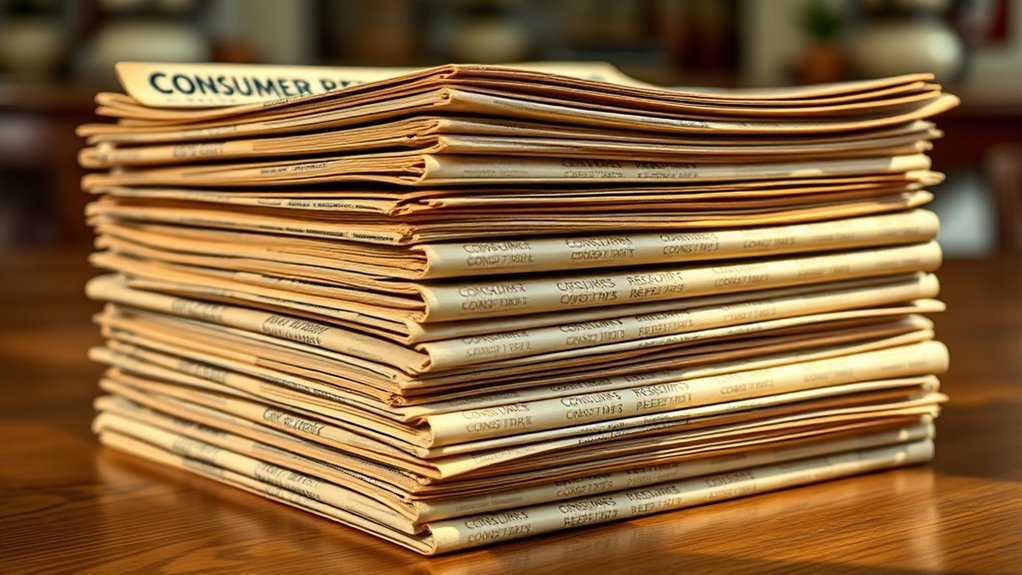
When you flip through old Consumer Reports magazines from the 1980s and 1990s, you’ll notice how they reveal shifting consumer interests and priorities over time. These vintage issues showcase the rise of early electronics like VCRs and video game consoles, marking the dawn of new technology categories.
You’ll also see how the focus on Cars evolved, with safety, affordability, and environmental concerns becoming more prominent. Consumer Reports magazines from that era reflect changing testing standards and market availability, highlighting how product reviews adapted to technological advances.
Why Vintage Consumer Reports Appeal to Collectors and Researchers

Because vintage Consumer Reports magazines offer a unique glimpse into past consumer habits and product developments, they attract both collectors and researchers alike. You’ll find collectors drawn to the nostalgic design and vintage product reviews, especially rare editions from the early 1980s covering electronics or automobiles.
These issues often fetch higher prices due to their scarcity and historical significance. Researchers, on the other hand, use vintage Consumer Reports as primary sources to study how product testing and consumer advice evolved over time.
Frequently Asked Questions
What Are Some Old Magazines That Are Worth Money?
You’ll find old magazines like rare vintage Consumer Reports, limited editions, and full sets from the ’80s and ’90s worth money. Collectors love issues with iconic products, unique ads, and nostalgic cover art, boosting their value considerably.
Is Consumer Reports Magazine Worth It?
Yes, Consumer Reports magazine is worth it if you want reliable product reviews and unbiased advice. You’ll save money and avoid poor purchases by trusting their thorough testing and expert evaluations before you buy anything.
What Are the Top 10 Most Valuable Magazines?
You’ll find top valuable magazines like Action Comics #1, Detective Comics #27, Playboy’s first issue, National Geographic’s first edition, The Beatles’ first magazine cover, and rare vintage issues of Life, Time, and Sports Illustrated highly prized.
What Magazines Are Considered Collectibles?
You’ll find collectibles in magazines like vintage National Geographic, first issues of Marvel comics, iconic Vogue editions, and rare Consumer Reports from the ’80s. They’re treasures packed with nostalgia, history, and stories you won’t believe!
Conclusion
If you think old Consumer Reports magazines are just dusty relics, think again! They’re treasure chests packed with insights into changing trends and consumer habits.
You’ll find info that’s worth its weight in gold for collectors and researchers alike. So, don’t toss those vintage issues—they’re like time machines, showing you how much the world of products and priorities has evolved.
Trust me, they’re way more valuable than you might expect! These old Consumer Reports magazines offer a unique glimpse into past consumer behavior, product testing, and market shifts. Whether you’re a collector hunting for rare editions or a researcher studying historical trends, these magazines hold significant value. So next time you spot an old issue, remember—it’s not just paper; it’s a piece of consumer history that could be worth something special.