Yes, your consumer report directly affects your credit by showing lenders your payment history, outstanding debts, and credit habits. These details all play a big role in determining your credit score.
Negative information, like late payments, can lower your score and make getting loans harder or more expensive.
Plus, errors or outdated data might unfairly hurt your creditworthiness.
That’s why it’s so important to review your report regularly and fix any mistakes as soon as you spot them.
Understanding how your consumer report impacts your credit can really help you protect your financial health.
Keeping an eye on your report is a smart way to stay on top of your credit and avoid surprises down the road.
Key Takeaways
- Consumer reports directly impact your credit score by showing your credit history. This includes both the good stuff and the not-so-good stuff.
- Negative info like late payments or defaults can lower your credit score. That, in turn, affects whether you get approved for loans and the interest rates you might pay.
- Having accurate consumer reports can boost your chances of getting a loan. It also helps lenders see that you’re creditworthy in a clear and reliable way.
- On the flip side, errors or outdated info on your report can unfairly hurt your credit score. That might block some financial opportunities you deserve.
- So, it’s a smart move to regularly check your consumer reports. If you spot mistakes, disputing them helps protect your credit score and keeps your finances in good shape.
Impact of Consumer Reports on Credit Scores and Loans

Because consumer reports directly affect your credit score, they play a crucial role in how lenders evaluate your creditworthiness. Your credit report, compiled by credit bureaus, reflects your credit history and includes both positive and negative information.
Negative information, like late payments or defaults, can lower your credit score. This makes loan approval harder or can result in higher interest rates.
Accurate consumer reports help lenders make informed decisions. But credit errors or outdated data can unfairly damage your creditworthiness.
The Fair Credit Reporting Act ensures your rights to accurate and fair consumer reports. By understanding how consumer reports impact your credit score, you can better appreciate their influence on your loan approval chances and overall financial health.
Regular reviews of your reports are essential to maintain a strong credit profile. It’s a good habit to check them often and catch any mistakes early.
How to Identify and Dispute Errors on Your Consumer Report
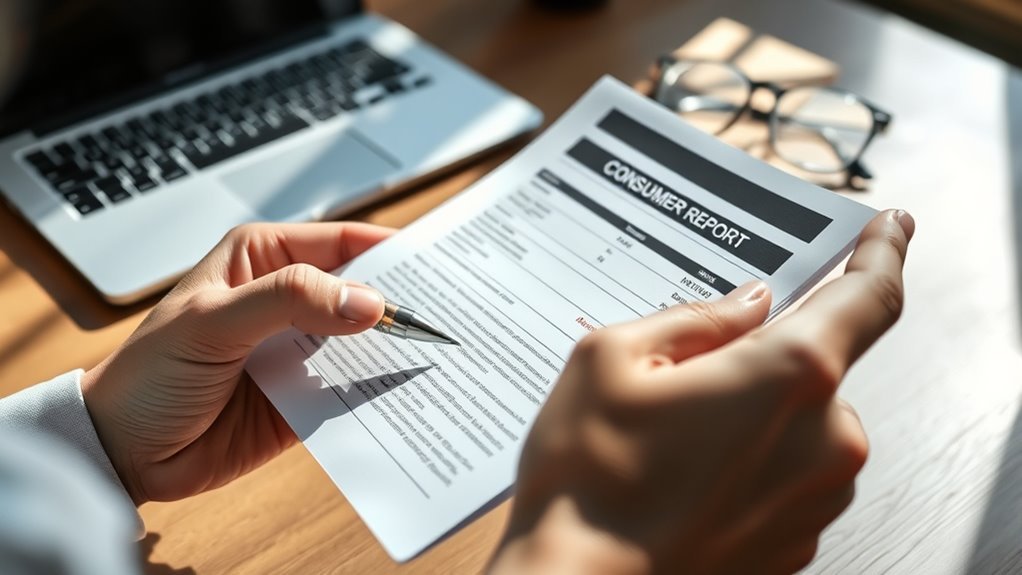
When you review your consumer report carefully, you can spot errors like incorrect personal details or unfamiliar accounts that might hurt your credit. To identify these errors, check every section of your credit reports thoroughly.
Carefully reviewing your consumer report helps you catch errors like wrong details or unfamiliar accounts that impact your credit.
If you find inaccurate information, you should dispute it promptly by contacting the credit reporting agencies and the data providers directly. Make sure to include supporting documents to back your claim.
Under the Fair Credit Reporting Act (FCRA), these agencies must complete an investigation within 30 days and correct or remove any verified errors. Regularly monitoring your consumer report helps you catch errors early, protecting your credit score from unfair damage.
Taking swift action ensures your credit reports reflect accurate information, which is vital for your financial health. So, don’t wait—keep an eye on your reports and address any issues as soon as you spot them.
Frequently Asked Questions
What Is the Biggest Killer of Credit Scores?
The biggest killer of your credit score is late or missed payments. They can greatly lower your score and stick around for years, so you should always pay on time to keep your credit healthy and strong.
Can I Pull My Own Consumer Report?
Yes, you can pull your own consumer report anytime. It’s free once a year from each major credit bureau through AnnualCreditReport.com, and doing so won’t hurt your credit score since it counts as a soft inquiry.
Is There a Difference Between a Consumer Report and a Credit Report?
Coincidentally, yes—you’ll find a credit report is a type of consumer report, but not all consumer reports are credit reports. You’ll notice consumer reports cover broader info, while credit reports focus specifically on your credit history.
What Are the Top 3 Things That Affect Your Credit Score?
The top three things affecting your credit score are payment history, amounts owed, and length of credit history. You should always pay on time, keep balances low, and maintain older accounts to boost your score effectively.
Conclusion
Understanding how consumer reports affect your credit is key to managing your financial health. For example, imagine you spot a mistaken late payment on your report that’s dragging your score down.
By disputing it promptly, you can restore your creditworthiness and improve your loan chances. Staying proactive with your consumer report helps you avoid surprises and keeps your credit profile accurate and strong.
Regularly checking your consumer report lets you catch errors early and understand how your financial behaviors impact your credit score. Remember, a healthy credit profile opens doors to better interest rates and financial opportunities.
So, taking charge of your consumer report is a smart move to protect and boost your credit. It’s all about staying informed, addressing issues quickly, and keeping your credit report clear and up-to-date. That way, you set yourself up for a brighter financial future.